
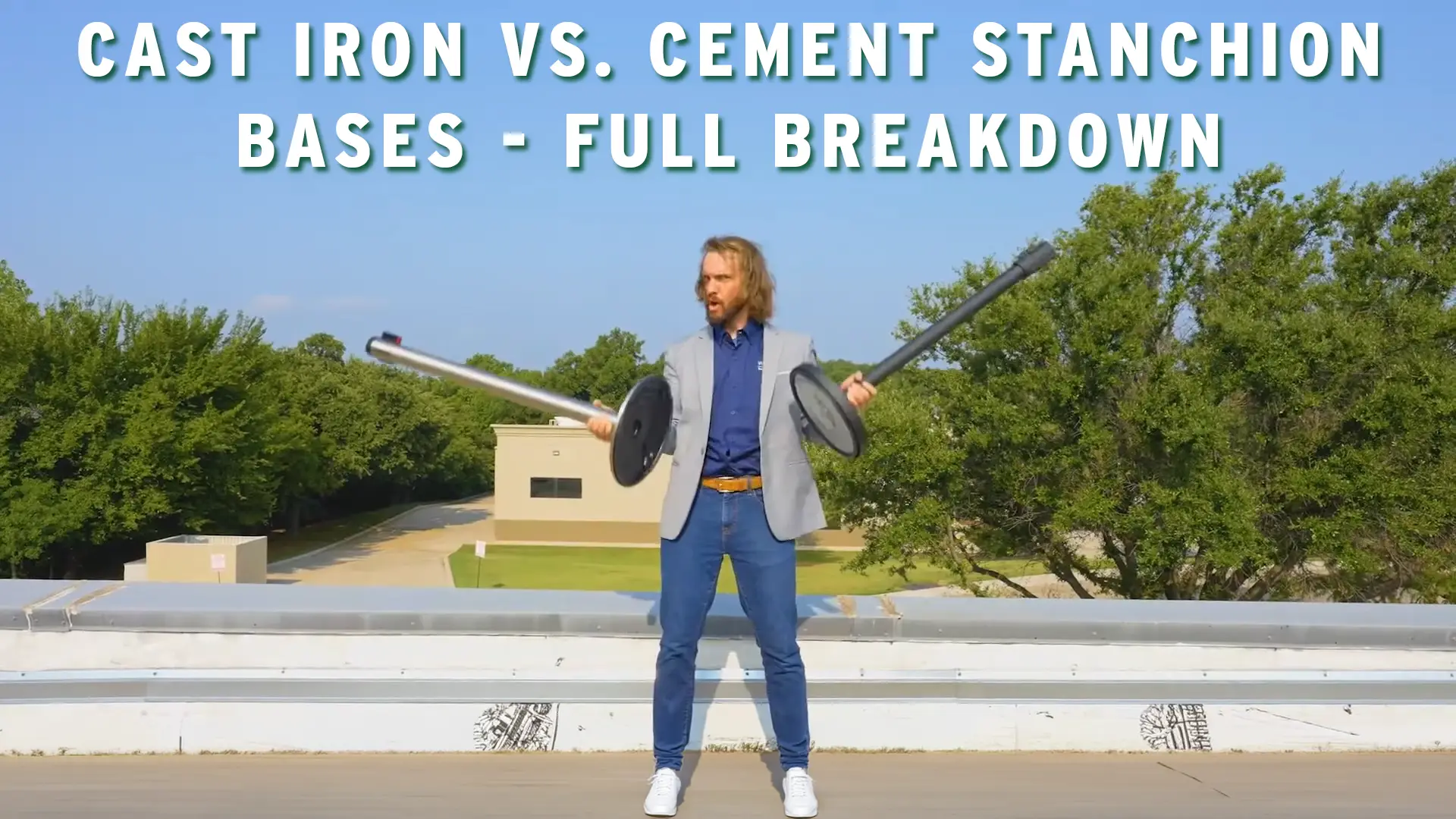

Cast Iron vs. Cement Stanchion Bases: Performance & Application Comparison
Cast iron and cement stanchion bases can appear similar in weight and design, but their long-term performance in real-world queue environments differs significantly. Material density, internal construction, and connection engineering all influence how a stanchion base performs under repeated use.
Understanding the differences between cast iron vs cement stanchion base designs helps facilities select the correct base type based on traffic conditions, installation frequency, and long-term durability requirements.
Article Overview
Executive Overview of Cast Iron vs. Cement Stanchion Bases
Stanchion base material plays a critical role in long-term stability, alignment retention, and durability in crowd management systems using post & rope or retractable belt stanchions. The choice between a cast iron vs cement stanchion base often determines how well a queue system performs under repeated use.
Although cast iron and cement stanchion bases can carry similar listed weights, they differ significantly in material density, fatigue resistance, and connection engineering.
Understanding these differences helps facilities specify the correct base for traffic conditions, installation frequency, and operational demands.
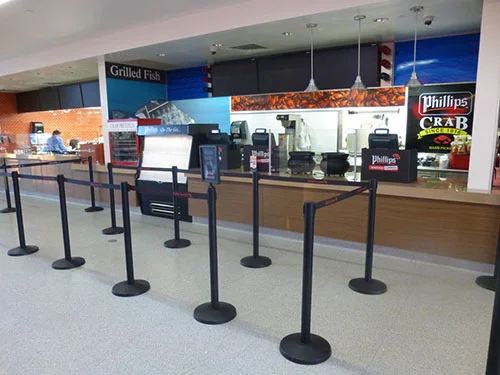
Material Density & Structural Behavior
Base performance is influenced less by weight alone and more by how the material responds to repeated stress.
Cast Iron Stanchion Bases
Cast iron is a dense, uniform material with strong resistance to deformation. In high-traffic environments, this density:
- Resists long-term fatigue
- Maintains consistent center of gravity
- Minimizes structural shift over time
- Provides higher tolerance to lateral belt tension
Because of its uniform composition, cast iron maintains structural integrity even when stanchion posts are frequently repositioned in high-traffic locations like airports.
Cement Stanchion (Reinforced) Bases
Cement bases rely on internal reinforcement and connection design to maintain stability. While capable of performing effectively in controlled environments, cement:
- Has lower material density
- Is more dependent on internal structural reinforcement
- Is more sensitive to repeated lateral stress
- Requires proper seating to prevent long-term lean
When properly engineered, cement bases offer cost-efficient performance in moderate-use applications.
Connection Engineering & Lean Prevention
Post leaning is typically not caused by insufficient weight — it is most often the result of connection stress and improper alignment systems.
EVERstraight® Self-Aligning Connection (Cast Iron)
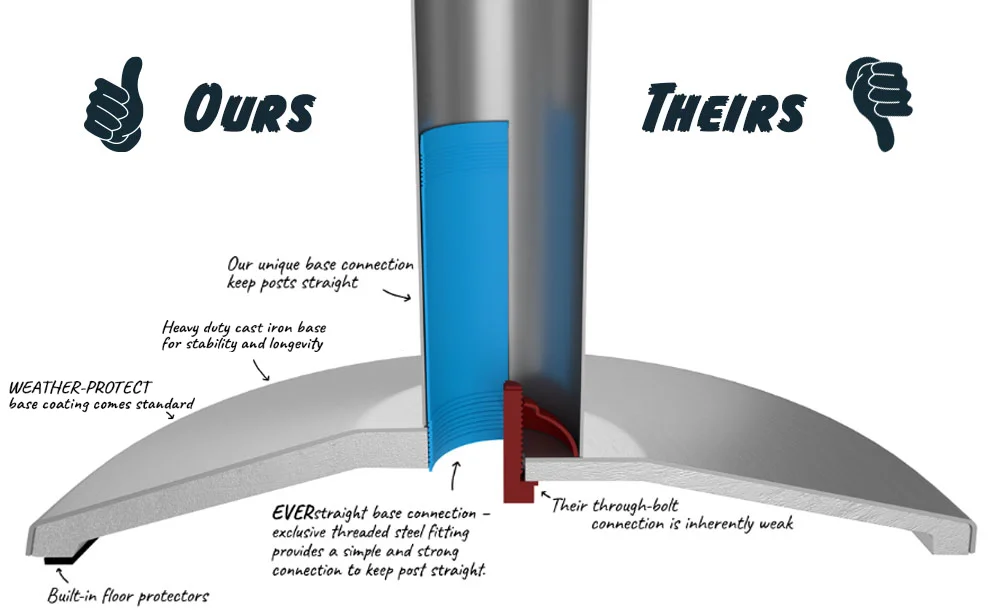
Cast iron bases incorporate a self-aligning threaded steel connection that:
- Automatically centers the post
- Reduces stress concentration at a single attachment point
- Maintains vertical alignment even with minor installation inconsistencies
- Improves long-term structural stability
This system significantly reduces the likelihood of post lean over time.
STAYstraight™ Wedge-Action Connection (Cement)
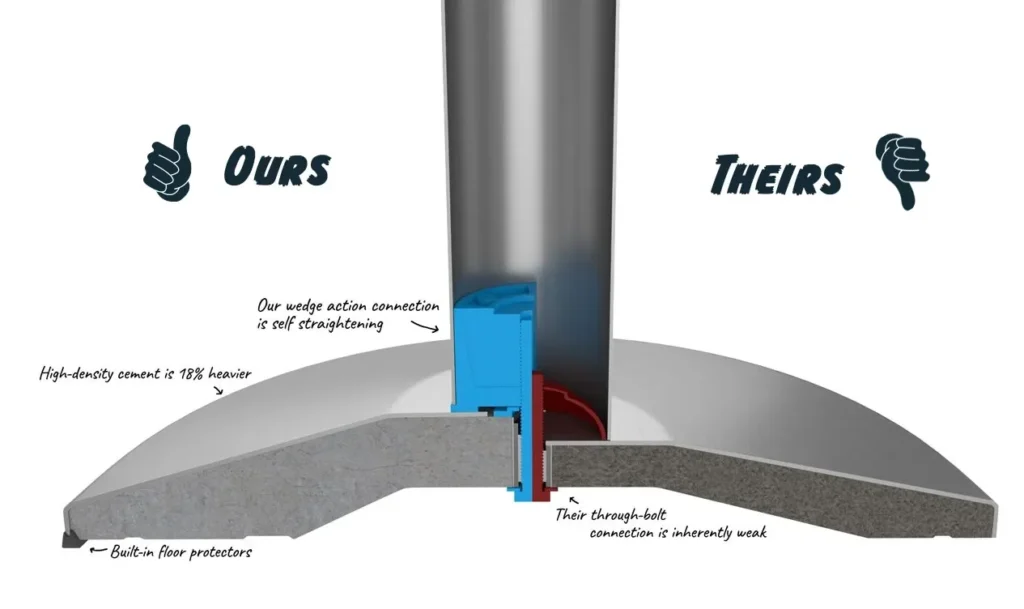
Reinforced cement bases utilize a wedge-action alignment system that:
- Draws the post into alignment during installation
- Reduces wobble compared to traditional bolt-through designs
- Improves durability in moderate-traffic applications
This design addresses common weaknesses found in lower-tier cement stanchion bases.
Performance in High-Traffic Environments
In facilities where systems are assembled, disassembled, and repositioned daily, material fatigue resistance becomes critical.
Recommended for High-Traffic Facilities:
Cast Iron Bases
- Airports and transportation hubs
- Casinos and gaming floors
- Stadiums and arenas
- Permanent queue installations
- High-volume public facilities
Cast iron bases provide superior long-term alignment retention and resistance to structural fatigue in high-traffic environments such as airports, casinos, and stadiums.
Recommended for Moderate or Temporary Use:
Cement Bases
- Retail environments
- Event spaces
- Seasonal queue systems
- Controlled indoor environments
When matched appropriately to environment and traffic levels, reinforced cement bases provide reliable performance.
Independent Cast Iron Base Drop Test
Real-world testing helps demonstrate how base materials respond to impact and stress. In a controlled drop test comparing cast iron and cement stanchion bases, the cast iron base showed superior resistance to structural deformation.
This difference is largely due to the material density and uniform structure of cast iron, which distributes impact forces more effectively than cement-filled bases.
The following cast iron vs cement stanchion base drop test demonstrates how material density affects durability during impact.
The material differences and connection engineering discussed above contribute directly to the performance differences outlined below.
Cast Iron vs Cement Stanchion Base Feature Comparison
| Feature | Cast Iron Base | Cement Base |
|---|---|---|
| Material Density | High, uniform | Reinforced composite |
| Fatigue Resistance | Excellent | Moderate |
| Alignment Technology | EVERstraight® threaded self-alignment | STAYstraight™ wedge-action system |
| Resistance to Leaning | Superior | Improved vs bolt-through |
| Ideal Traffic Level | High | Moderate |
| Installation Tolerance | Forgiving | Requires proper seating |
| Upfront Cost | Higher | Lower |
How to Specify the Correct Stanchion Base
Select cast iron when:
- Long-term alignment is critical
- Systems are handled daily
- Installation conditions vary
- Facilities require maximum durability
Select cement when:
- Budget constraints are primary
- Traffic is controlled
- Installation is temporary or seasonal
Material selection should align with operational demands, not simply weight specifications.
Frequently Asked Questions
Are cast iron stanchion bases heavier than cement bases?
Not necessarily. Cast iron and cement stanchion bases can have similar listed weights, but their performance differences come from material density and structural behavior rather than weight alone.
Cast iron provides a more uniform, dense structure that resists deformation and long-term fatigue.
Why do some stanchion posts lean over time?
Leaning typically occurs due to connection design rather than base weight. Through-bolt connections can loosen with repeated use, allowing posts to shift slightly out of alignment.
Engineered connection systems, such as self-aligning threaded connections or wedge-action alignment systems, help reduce long-term leaning.
Are cement stanchion bases reliable?
Yes, when properly engineered and used in appropriate environments. Cement bases perform well in moderate-traffic or temporary queue setups.
However, facilities with heavy daily use often benefit from cast iron bases due to their higher fatigue resistance and durability.
Which stanchion base is best for airports or stadiums?
High-traffic facilities such as airports, transportation hubs, casinos, and stadiums typically benefit from cast iron stanchion bases. Their dense material composition and engineered connection systems provide better long-term stability.
Beyond Standard Portable Bases
Some environments introduce additional complexity:
- Uneven flooring
- High belt tension
- Extended belt spans
- ADA pathway requirements
- Wind exposure
In these cases, engineered base configurations or custom crowd control solutions may be required to ensure performance and compliance.
Consult with a Tamis Corporation product specialist for application-specific recommendations.